
What is MVP in Software Development? A Complete Guide


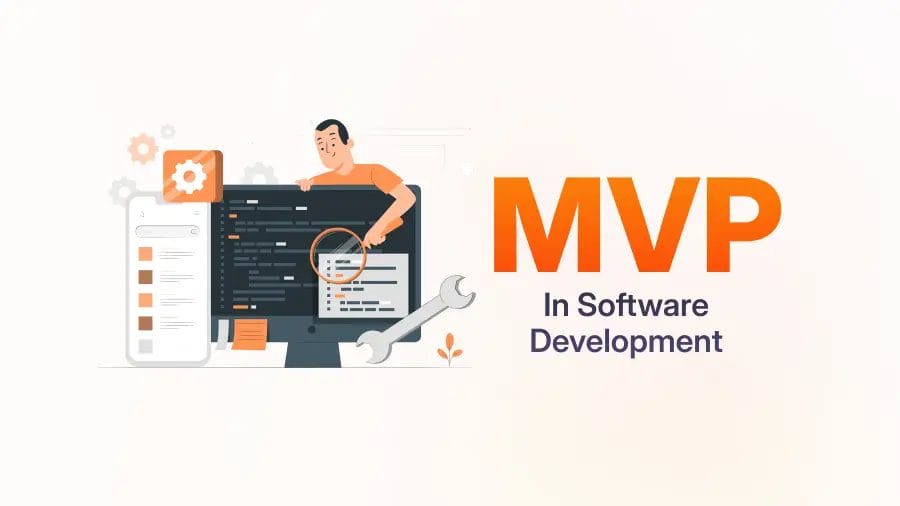
Building a software product takes time, money, and serious team effort. But here is the hard truth: most products fail not at launch, but long before it, because the wrong thing was built. Teams spend weeks in development cycles, only to release something the target audience never connected with.
The fix is not to build faster. It is to build smarter. Releasing a lean, focused version of a product first, testing it with real users, and making decisions based on what the data shows, is how the most recognized software products in the world got started. Airbnb, Slack, Tinder, and Spotify all took this path before they became household names.
That approach has a name: MVP. This guide breaks down what it is, how it works, and how to build one the right way.
MVP in Software Development: Definition and Origin
MVP stands for Minimum Viable Product, and in software development, it is not a half-built product or a rough first attempt; it is a deliberately small, focused release that solves one core problem for real users and generates the feedback needed to make informed decisions about what to build next.
The core idea behind an MVP is validation over perfection, which means teams ship early with just enough features to test their assumptions in the real market rather than spending months building a complete product that may not reflect what users actually want or need.
According to CB Insights, 42% of startups fail because their product did not match what the market actually needed, and an MVP directly addresses this by placing real user data at the center of every development decision before the full budget and timeline are committed to a direction that has not yet been confirmed.
Key Characteristics of an MVP

A strong MVP delivers essential features fast and collects real feedback that guides future iterations. Here is what defines a well-built MVP:
Minimum but Complete Set of Features:
An MVP includes only the features that solve the user’s primary pain point. There are no advanced filters, integrations, or personalization layers. Teams use the MoSCoW method to categorize features into must-haves, should-haves, could-haves, and wo n’t-haves, keeping the scope tight from the start.
Core Functionality Focus:
The MVP must reliably perform its main function without broken implementations. If the MVP is a task manager, the workflows for creating, editing, and status updates must work end-to-end. Half-built features and broken flows produce unreliable feedback and reduce user trust before the product has a chance to prove its value.
Simple and Streamlined Architecture:
The MVP is built on a minimal technical stack that speeds up development. Lightweight frameworks, reusable modules, and cloud services such as AWS Lambda and Azure Functions reduce infrastructure setup time. Clean API design and modular code make the product easier to extend as feedback comes in.
Early Usability:
An MVP is more than a prototype. It must be stable enough and have UI flows clear enough for real users to interact with confidently. Teams use Figma or Sketch for initial UI designs, incorporate basic form validation and input handling, and apply agile testing to eliminate confusion before release.
User-Centered Design
The MVP’s UI and workflows must match the behavior, preferences, and environment of early adopters. User journey maps, behavioral data, and pain-point analysis guide development. Clear CTAs, minimal clicks, and logical screen flows are non-negotiable from the first version.
Why Build an MVP? (The Benefits)
Building an MVP before a full product is a strategic decision that reduces risk at every stage of development. Here is what it delivers.
Faster Time to Market:
An MVP reduces the development scope to the essentials. Teams launch in weeks or months instead of years. Early market presence creates early feedback, and early feedback creates better products faster.
Reduces Financial Risk:
Full product development demands significant investment before any user validation takes place. An MVP limits the initial spend so that if the concept needs a major change in direction, the financial exposure stays manageable. Teams do not lose their entire budget before they learn whether the idea works. You can use the Technext MVP Cost Calculator to get a realistic estimate based on your specific product before committing to a budget.
Validates Demand Before Full Investment:
An MVP tests whether real users want the product before the team builds the rest of it. Surveys and interviews tell you what users say they want. An MVP shows you what they actually use. That gap between stated preference and real behavior is where most product assumptions collapse.
Attracts Early Adopters and Investors:
A live product with active users carries more weight than a business plan or a pitch deck. It demonstrates that the team can execute and that real people are engaging with the product. Investors respond to evidence, and an MVP with measurable user activity is concrete evidence.
Collects Real User Feedback Early:
Behavior-based feedback from the MVP phase shapes every subsequent product decision. Teams learn which features drive engagement, which ones go unused, and what problems remain unsolved after launch. This feedback is only available after real users interact with the product.
Saves Time on Unwanted Features:
Without MVP validation, development teams frequently spend engineering time on features users never needed. The MVP model reveals which features matter before that time is spent — and redirects effort toward what actually adds value
Types of MVPs
Different products and validation goals require different MVP approaches. These are the four most widely used types in software development.
Landing Page MVP — Gauge Interest Before Building
A single webpage that presents the product concept, explains its value, and collects email sign-ups or pre-registrations. No software is built. The purpose is to measure user interest before any development begins. This type is the fastest and least expensive way to test whether an audience exists for the product. It is also a common entry point into web-based MVP development for founders who are not yet ready to build a full product.
Wizard of Oz MVP — Looks Automated, Manually Run Behind the Scenes
The product appears fully functional to users. In the background, the team handles all processes manually. Users receive a real product experience without any automation being built. This type validates whether users engage with the service at all, without the cost of building the system that would eventually power it at scale.
Concierge MVP — Personalized, Hands-On Service Delivery
The team delivers the service directly and personally to each early user. There is no platform or automated interface. This approach generates deep qualitative insight into user expectations, behavior, and friction points. It is not scalable, but it produces some of the most detailed and actionable early-stage feedback available.
Single-Feature MVP — One Core Feature Done Exceptionally Well
One feature is built and released with full quality. Nothing else is included. This forces the team to identify and commit to the single most important function the product must perform. Additional features are added only after the core feature proves its value with real users.
How to Build an MVP — Step by Step
The full step-by-step MVP development process covers every stage in detail for founders who want to go deeper.
Define the Problem and Your Idea
Technext provides CTO as a Service, which means founders without a technical background get an experienced product strategist who helps define the problem clearly, validate the idea, and structure the product direction before any development begins.
Conduct Market Research
Technext’s startup services team works alongside founders to assess the competitive landscape, identify gaps in existing solutions, and align the MVP scope with real market demand rather than internal assumptions.
Identify and Prioritize Core Features
With over 13 years of experience building products across fintech, edtech, marketplaces, and SaaS, Technext brings the product knowledge to separate must-have features from noise and run structured prioritization before a line of code is written
Define Scope and Limitations
Technext follows a structured scoping process that sets clear boundaries on what the MVP will and will not include, preventing the scope creep that delays launches and inflates development costs.
Choose Your Tech Stack and Development Method
Technext’s 70+ engineers work across React, Node.js, Python, Django, React Native, Flutter, and cloud infrastructure on AWS, GCP, and Azure — covering both custom development and no-code builds depending on the product requirements and timeline.
Run a Discovery Phase
Technext runs dedicated discovery workshops that map user journeys, define key flows, and validate UI approaches through wireframes before development starts — the same process that protects against costly mid-build corrections.
Design UI/UX
Technext’s dedicated UI/UX team handles wireframing, prototype design, product design, and UX consulting, building interfaces that prioritize usability over visual polish at the MVP stage.
Develop and Launch
Technext delivers MVP development through short agile sprints with a controlled early adopter release, building only what is defined in scope and setting measurable KPIs before launch day.
Gather User Feedback and Iterate
Post-launch, Technext supports the full iteration cycle — translating user feedback and analytics into a prioritized development roadmap and shipping the next version with the same structured process.
Common MVP Mistakes to Avoid
Building Too Many Features Upfront: Adding features outside the Must-have scope is the most frequent mistake teams make. Each extra feature adds cost, extends the timeline, and dilutes the signal from early users. Scope discipline is required at every stage of the build — not just at planning.
Skipping Market Research: Launching without prior research produces feedback with no baseline to measure against. Teams skip this step to save time and end up with data they cannot interpret. Market research defines what the MVP is trying to prove before a single line of code is written.
Ignoring User Feedback After Launch: Collecting feedback and not acting on it removes the core benefit of building an MVP. The MVP exists to generate learning, and that learning requires a structured process to review, prioritize, and apply to the next iteration.
Confusing MVP with a Prototype: A prototype demonstrates what a product will look like. An MVP is a functional product that real users interact with and generate real behavior data from. The two serve different purposes at different stages of development. Treating them as interchangeable leads to launching something that cannot generate usable feedback.
Not Defining Success Metrics Before Launch: Without pre-defined KPIs, there is no objective way to evaluate what the MVP proved or whether it succeeded. Success metrics — retention rate, sign-up volume, task completion rate — must be established before the first user touches the product.
MVP vs. Full Product
| MVP | Full Product | |
| Scope | Core features only | Complete feature set |
| Cost | Lower, controlled | Higher, often expanded |
| Risk | Validated incrementally | Built on assumptions |
| Timeline | Weeks to a few months | Months to years |
| Purpose | Validate demand and direction | Deliver the complete solution |
| Feedback | Collected before further investment | Collected post full-scale launch |
When to Move from MVP to Full Product
The transition from MVP to full product is appropriate when user feedback confirms the core problem is solved, retention data shows users return after their first experience, and the team has a validated understanding of which features to build next. The decision to expand should be driven by data — not by timeline pressure or investor expectations.
MVP Is the Starting Point, Not the Finish Line
Teams that treat the MVP as the final product leave growth on the table. Teams that move to full product development before the MVP have generated enough learning to repeat the same mistakes the MVP was designed to prevent. The MVP opens the feedback loop. Everything that follows depends on keeping that loop active.
Who Should Build an MVP?
Startups Validating New Ideas: Startups operate under limited budgets and narrow timeframes. An MVP allows a founding team to test the core hypothesis before spending the majority of their runway on a direction that has not been validated by real users.
Enterprises Exploring Innovation: Large organizations use MVP development to test new product lines, internal tools, or market expansions without disrupting existing operations. The MVP contains the risk of new initiatives within a defined, measurable scope.
Founders Without Technical Co-Founders: Non-technical founders can partner with an MVP development company to bring a concept to market without building an in-house engineering team from the start. The MVP approach gives them a structured path to validation without requiring deep technical knowledge.
Anyone with a Limited Budget and Timeline: Any team working within defined constraints benefits from the MVP model. Focused development on core features keeps spending predictable, timelines achievable, and the product aligned with what real users need.
An MVP is the lean, evidence-based way to build software. It replaces assumptions with data, reduces risk with validation, and replaces lengthy build cycles with fast, focused releases. The companies that get the most out of the MVP approach share one discipline: they build only what is necessary to test the idea, release it to real users, and let behavior data drive every decision that follows. Build less. Learn more. Grow faster. That sequence is what separates products that find their market from products that do not. Ready to build your MVP? Start by defining the one problem your product solves. Identify the minimum set of features that proves it. Set your success metrics before launch. Then build only that, and use what you learn to build everything that comes next.

Globally Recognised by B2B marketplaces
Kick start with your dedicated squad in Technext
Skip the hiring headache. NDA first, transparent rates, agile delivery from day-1.
No commitment • Reply within 2hrs

S. Polash
Sr. Engineer

Reza H.
Project Manager

Desh C.
Lead Developer

Imran K.
UI/UX Lead

