
10 Best Startup App Development Companies in the USA (2026)

The U.S. mobile app market is projected to generate over $150B globally in 2026 (Statista).
Yet most startup apps never break through; 42% of startups fail because they build products without proven demand (CB Insights).
The right development partner can help avoid that trap by focusing on lean builds, fast testing, and scalability.
After reviewing 755+ agencies, we’ve shortlisted 9 Best Startup App Development Companies for startups, combining technical depth with processes that help founders validate ideas and grow smarter.
Quick look at 9 startup app partners (USA, 2026)
| Company | Founded | Primary U.S. Presence | Team | Avg Rate | Min Budget | Reviews / Listings |
| Technext | 2012 | US & UK affiliations; HQ Dhaka | 50–99 (site/LinkedIn) | ~$50/hr | $1k–$10k | Clutch (profile) |
| Mercury Development | 1999 | Stuart/Miami, FL + other U.S. cities | 250–499 (DesignRush) | ~$50–$99/hr (typical on directory listings) | Inquire | DesignRush 4.9 (15); Clutch profile; Company site |
| Suffescom Solutions | 2013 | Los Angeles, CA (office); HQ India | 250–499 | Inquire | $10k–$25k | DesignRush listing; U.S. address ref |
| Innovase | 2007 | USA, Europe, Global delivery | 3,000+ | $75/hr | ||
| Goji Labs | 2014 | Los Angeles, CA | <49 | $149/hr | $25k–$50k | DesignRush; Clutch profile; Company site |
| AppMakers USA | 2014 | Los Angeles, CA | <49 | Inquire | $10k–$25k | DesignRush; Company site |
| Trango Tech | 2003 (Clutch); some directories vary | San Jose, CA (US presence) | 100–249 (DR) | Inquire | Inquire | DesignRush; Clutch shows “Founded 2003”; Company site |
| FuturByte | 2018 | Wilmington, DE (1007 N Orange St, 4th Fl, Ste #3907) | 100–249 | $50/hr (DR) | Inquire | DesignRush; Contact page |
| TRIARE | 2015 | Works with U.S. startups; HQ Warsaw, Poland | 50–99 | $45/hr | Inquire | DesignRush 4.9 (11) |
| Synergy Labs | 2019 | Miami, FL (78 SW 7th St) | 50–99 | $25/hr | Inquire | Company site; BBB listing; DesignRush page |
How We Judge Partners
Founders don’t need feature-loaded apps. They need speed to learning.
We ranked firms on:
- Ability to trim scope to testable core features.
- Consistent release cadence.
- Tech stacks that scale to v2.
- Transparency on budget trade-offs.
Realistic ranges in 2025:
- $15k–$50k+ for a focused MVP
- 8–16 weeks for delivery
If someone promises “full apps” for $5k or in 3 weeks, assume corners will be cut..
1. Technext
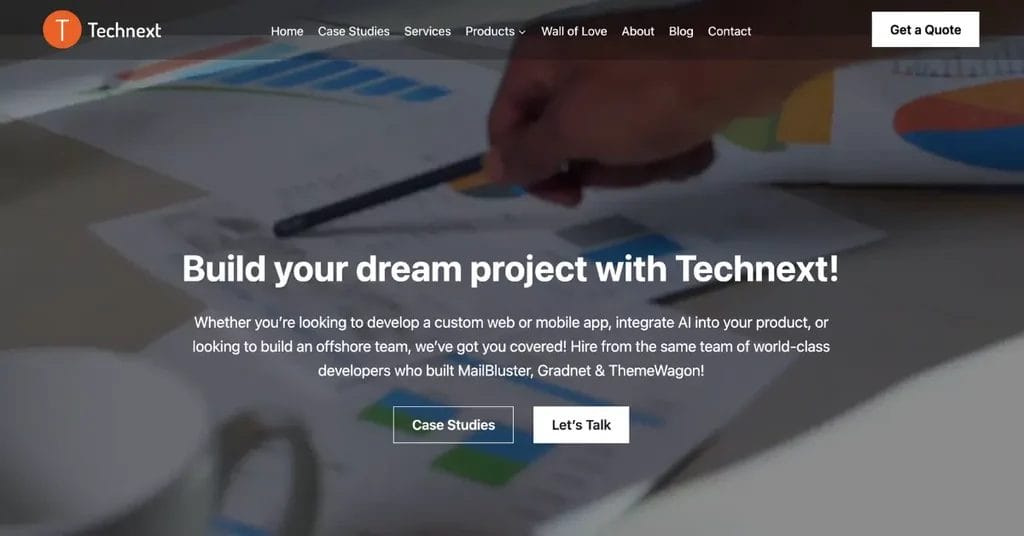
- Website: technext.it
- Year Founded: 2012
- Location: USA, UK, Canada, Bangladesh
- Clutch Review: 5.0
- Reviews on Google: 5.0
- Avg. Hourly Rate: $50/hr
- Budget: $2,000 – $10,000
- Employees: 50 – 200
Technext is a lean, startup-focused team with over a decade of experience helping founders get from idea to launch.
Unlike agencies that overload MVPs with features, Technext keeps scope tight so startups can test quickly. Their portfolio spans SaaS tools, marketplaces, and mobile apps used by 100K+ businesses worldwide.
What stands out is their ability to deliver usable MVPs within 8–12 weeks—without requiring a Silicon Valley budget.
For early-stage teams that need speed, affordability, and long-term support, Technext feels less like a vendor and more like an embedded partner.
Why Choose Technext for Your Startup App?
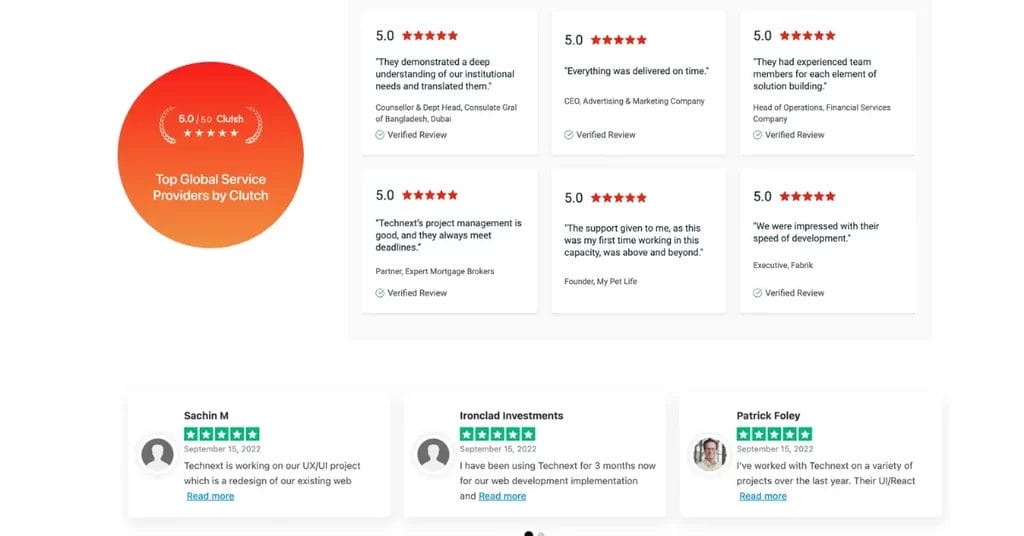
If you’re a startup founder weighing options, Technext deserves a close look. Unlike many large agencies that focus on enterprise clients, Technext has positioned itself as a genuine partner for early-stage companies.
They’ve been building apps since 2012, with a team of 50–200 engineers and designers spread across the US, UK, Canada, and Bangladesh.
That global footprint means access to strong talent at rates ($50/hr on average) that are much more manageable than the $150–$200/hr you’ll often see in San Francisco or New York.
The standout value of Technext is practical MVP delivery.
Instead of bloated roadmaps, they trim builds to the core flows you actually need to validate.
Technext helps you test demand before overinvesting.
Their past products (like MailBluster, now powering 25K–50K+ businesses) show they can ship something lean that scales later.
If your startup is operating on a limited budget but wants a partner that understands both the speed and discipline required to survive early stages, Technext is a smart pick.
2. Mercury Development
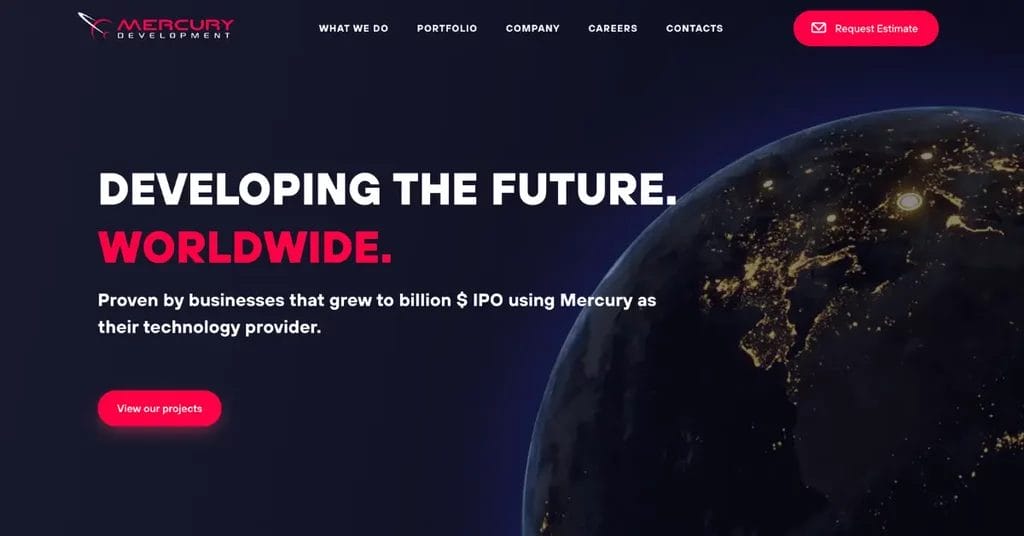
- Website: mercdev .com
- Year Founded: 1999
- Location: 901 SW Martin Downs Blvd, Suite 321, Stuart, Florida 34990, United States
- DesignRush Reviews: 4.9 (15)
- Reviews on Google: N/A
- Avg. Hourly Rate: $50/hr
- Budget: Inquire
- Employees: 250–499
Mercury has been around since the dot-com era, making them one of the most experienced players on this list. Their team has delivered apps for industries ranging from healthcare to fintech, emphasizing transparency and measurable results.
Startups benefit from their mature processes—project tracking, quality assurance, and dedicated account managers—which can de-risk early launches.
For founders looking for a stable, process-driven team that won’t disappear after launch, Mercury is a solid pick.
3. Suffescom Solutions Inc
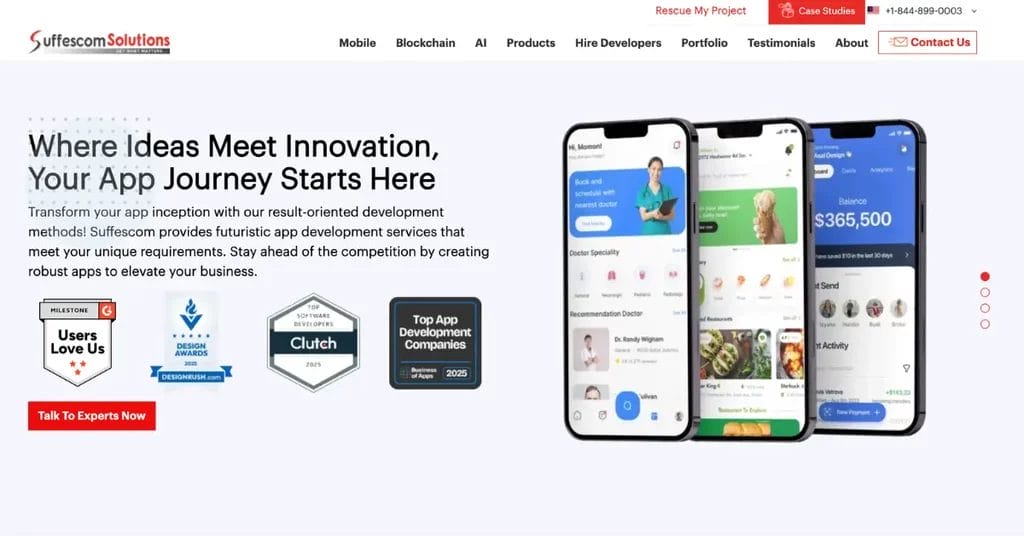
- Website: Suffescom. com
- Year Founded: 2013
- Location: 5792 W Jefferson Blvd., Los Angeles, California 90016, United States
- DesignRush Reviews: 5.0 (39)
- Reviews on Google: 5.0 (3)
- Avg. Hourly Rate: Inquire
- Budget: $10,000–$25,000
- Employees: 250–499
Suffescom has carved out a reputation for helping startups stand out with custom-built apps and digital products.
With 5.0 ratings on both Google and DesignRush, their clients consistently highlight responsiveness and project clarity.
They specialize in industries like e-commerce and blockchain-enabled platforms, which makes them a good choice for startups working on next-gen technologies.
4. Innowise
- Website: innowise.com
- Year Founded: 2007
- Location: USA, Europe, Global delivery
- Reviews: 4.9
- Rating: Clutch Rating: 4.8+
- Avg. Hourly Rate: $75/hr
- Budget: Custom (mid-market to enterprise)
- Employees: 3,000+
Innowise works with U.S. startups that need to build reliable digital products under real business constraints. The company supports early stage and growing teams by developing mobile and web applications that are stable, flexible, and ready to scale.
Their teams handle the full product journey from early validation and MVP development to scaling, feature expansion, and ongoing technical support. Innowise uses modern technology stacks and cloud infrastructure to help startups move quickly while keeping systems clean and maintainable.
5. Goji Labs
- Website: gojilabs .com
- Year Founded: 2014
- Location: 800 Wilshire Blvd Suite 200, Los Angeles, California 90017, United States
- DesignRush Reviews: 5.0 (72)
- Reviews on Google: 4.9 (52)
- Avg. Hourly Rate: $149/hr
- Budget: $25,000–$50,000
- Employees: Under 49
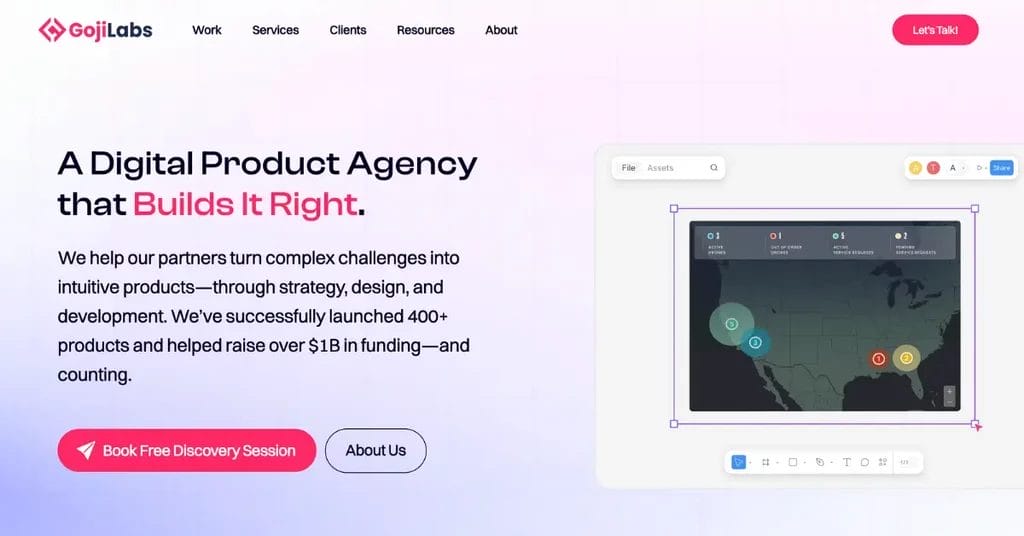
Goji Labs is a boutique product studio known for building apps “right the first time.”
Their process is design-heavy and validation-driven, which works well for founders who want to avoid rework later.
With glowing reviews (5.0 across 70+ clients), they’ve earned trust by focusing on startup-specific challenges: tight budgets, shifting scopes, and early pivots.
6. AppMakers USA
- Website: appmakersla. com
- Year Founded: 2014
- Location: Los Angeles St, United States
- DesignRush Reviews: 5.0 (53)
- Reviews on Google: N/A
- Avg. Hourly Rate: Inquire
- Budget: $10,000–$25,000
- Employees: Under 49
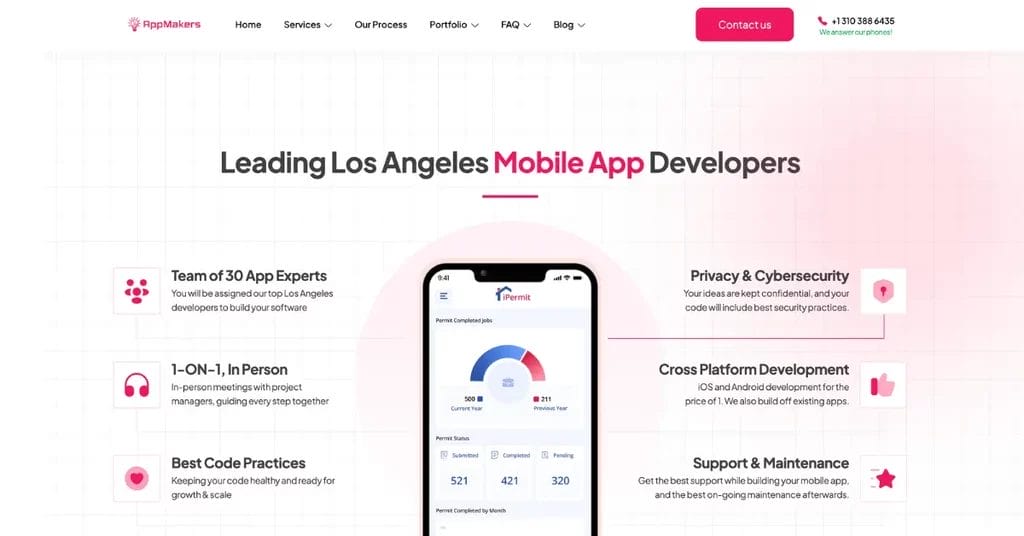
AppMakers USA positions itself as a top mobile and web development agency for startups. Their small team size means more direct access to senior developers—a plus for startups who don’t want to get lost in big-agency layers.
They’re a good fit if you’re looking for a hands-on partner that can help with everything from wireframes to post-launch tweaks.
7. Trango Tech
- Website: Trangotech .com
- Year Founded: 2003
- Location: Suite 373, 111 North Market Street, San Jose, California 95113, United States
- DesignRush Reviews: 4.7 (7)
- Reviews on Google: 5.0 (1)
- Avg. Hourly Rate: Inquire
- Budget: Inquire
- Employees: 100–249
Trango Tech covers a wide range: apps, e-commerce, staff augmentation, and even BPO services. For startups, this breadth means you get not just development but also scaling support as your business grows.
Their track record across multiple sectors makes them versatile, but they’re best suited for startups that need more than just coding—such as ongoing staffing and tech operations.
8. FuturByte
- Website: futurbyte .co
- Year Founded: 2018
- Location: 1007 N Orange St. 4th Floor STE 3907, Wilmington, Delaware 19801, United States
- DesignRush Reviews: 4.8 (5)
- Reviews on Google: 5.0 (1)
- Avg. Hourly Rate: $50/hr
- Budget: Inquire
- Employees: 100–249
FuturByte is relatively new but growing fast, with strong ratings for reliability and delivery.
They brand themselves around the belief that “anything is possible,”
but what matters is their ability to execute MVPs quickly for startups across fintech, logistics, and SaaS.
Their Delaware HQ makes them attractive for startups with U.S. compliance requirements but global teams.
9. TRIARE
- Website: Triare .net
- Year Founded: 2015
- Location: 22 Piękna, Warsaw, 05-075, Poland
- DesignRush Reviews: 4.9 (11)
- Reviews on Google: N/A
- Avg. Hourly Rate: $45/hr
- Budget: Inquire
- Employees: 50–99
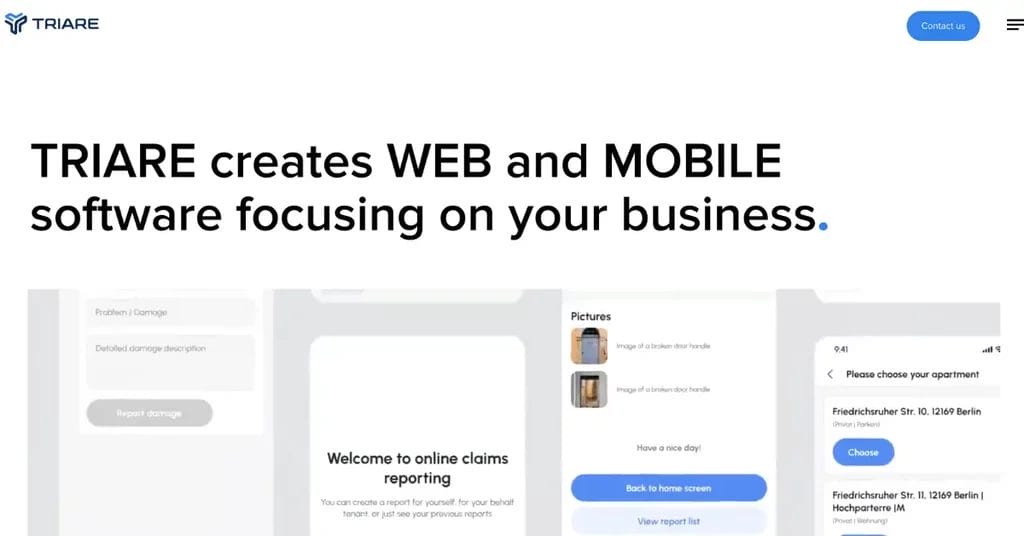
Though headquartered in Poland, TRIARE works extensively with U.S. startups.
They stand out for their product discovery workshops, which help founders clarify scope before spending big on development.
This is a mistake many startups make—building too much too early—and TRIARE mitigates that risk.
10. Synergy Labs
- Website: Synergylabs .co
- Year Founded: 2019
- Location: 78 SW 7th St, Miami, FL, Miami, Florida 33130, United States
- DesignRush Reviews: 4.9 (10)
- Reviews on Google: 5.0 (28)
- Avg. Hourly Rate: $25/hr
- Budget: Inquire
- Employees: 50–99
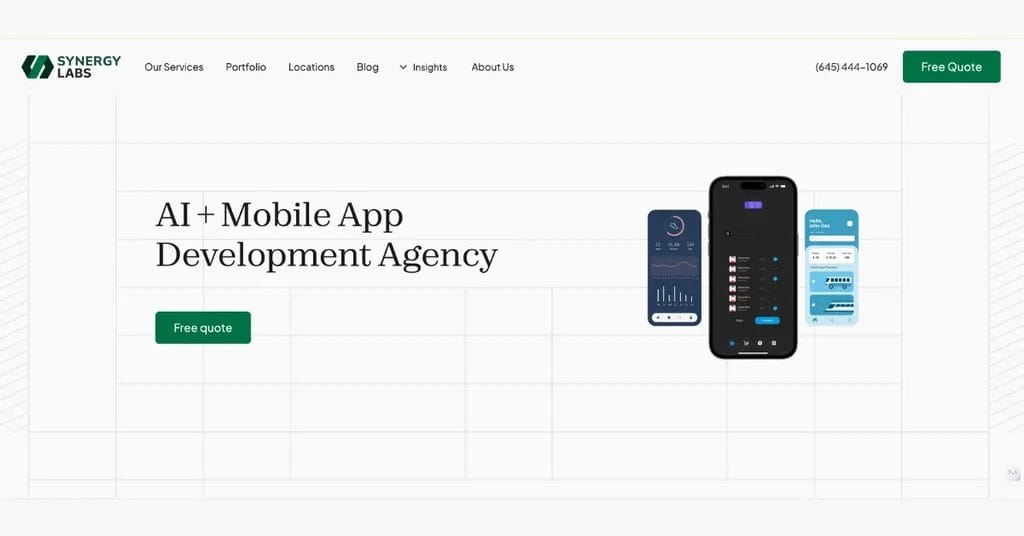
Synergy Labs calls itself a “boutique” app agency, which is accurate: they’re small enough to give personal attention, but capable of delivering polished apps across healthcare, SaaS, and retail.
With a 5.0 Google rating from 28+ clients, they’ve quickly established credibility as a Miami-based startup partner.
How to Choose the Right App Development Partner for Your Startup
Define your MVP goals
Start with clarity. What exactly do you want your app to prove in its first version? For some startups, it’s as simple as testing whether people will sign up.
For others, it’s validating complex workflows like payments or booking flows. A clear MVP goal keeps both you and your development partner focused on what matters most.
Align with budget and timeline
Be upfront about how much you can spend and when you need to launch. A good partner will tell you what’s possible within your constraints, rather than overselling.
If you only have three months of runway left, you don’t need a 12-month dev cycle — you need a thin, working slice that can be tested.
Match tech stack with your future scaling plans
Don’t just think about launch day — think about year two. If you expect to grow fast, make sure the company’s tech stack fits the long haul.
For example, if you’re planning for heavy analytics, Node.js and Python might make sense. If you need native performance for mobile, Swift or Kotlin may be the better bet.
Ask them why they recommend a stack — their reasoning matters as much as the tools themselves.
Consider agency size
Smaller boutique firms often mean more flexibility, direct access to senior engineers, and faster pivots. Larger agencies bring process maturity, QA systems, and more predictable delivery.
There’s no “better” option here — just a better fit for your situation. If you’re iterating quickly, lean boutique. If you’re building for an enterprise contract, lean bigger.
Importance of post-launch support
Launching your MVP is just the start. Bugs will surface, user requests will come in, and you’ll want to iterate fast.
Before you sign, ask: What happens after launch? Do they offer bug fixes, iterative sprints, or a handover plan if you move to an in-house team? Many startups stumble here, so don’t overlook it.
Common Mistakes Startups Make When Hiring App Developers
Going for the cheapest option
It’s tempting to pick the lowest bid, but cheap often means shortcuts. That might save money today, but you’ll pay later in technical debt, rewrites, and delays.
A poorly built app can derail investor pitches or frustrate early users. Think long-term value, not short-term savings.
Skipping discovery and validation
Many startups rush straight into coding without clearly defining the problem, target users, or core flow. Skipping the discovery phase means building features based on assumptions, not facts.
The result is an app that looks fine but doesn’t solve the real problem. A good partner will push you to validate before building.
Ignoring scalability
Your MVP doesn’t need to handle millions of users, but it should be built with growth in mind. If developers cut corners on architecture, adding features later becomes a nightmare.
You don’t need enterprise-level systems, but you do need a foundation that won’t crumble when you scale.
Forgetting about support and maintenance
An app isn’t finished when it launches. Bugs, updates, and user feedback will keep coming.
Startups often fail to ask: Who maintains the app after launch? Without a plan, you’re left scrambling when the first issue hits.
Make sure your partner offers post-launch support or transition plans.
FAQ Section
How much does it cost to develop a startup app in the USA?
Costs vary widely depending on scope and complexity. A simple MVP might start around $15k–$50k+, while more advanced apps with multiple features can easily cross $100,000 or more.
Factors like platform choice (iOS, Android, or both), integrations, and design complexity all play a role. Always clarify what’s included—development, design, testing, and post-launch support—when comparing quotes.
How long does app development take?
For most startups, a well-scoped MVP takes 8–16 weeks. That includes discovery, design, development, and initial testing.
More feature-rich products or apps with complex integrations can extend beyond six months. The key is to lock down the minimum viable scope first, then plan iterative releases.
What’s the difference between MVP development and full product development?
An MVP (Minimum Viable Product) is the first usable version of your app, built with only the core features needed to test your idea with real users.
Full product development includes a complete feature set, polished design, scalability, and long-term infrastructure. Think of the MVP as a pilot episode—it validates whether the show is worth making before producing the entire season.
Should startups hire freelancers or agencies?
Freelancers are cost-effective and flexible but can pose risks with reliability, continuity, and scaling. Agencies bring structured processes, broader expertise, and long-term support, but at a higher cost.
For small, clearly defined projects, a freelancer might work fine. For complex MVPs or anything that needs post-launch growth, agencies are usually safer.
How do I know if an app development company is legit?
Check for verified reviews on platforms like Clutch, DesignRush, or Google, review their case studies, and ask for client references.
A credible company will be transparent about its process, provide a clear contract, and show past work relevant to your industry. Be cautious of teams that promise unrealistic timelines or drastically undercut standard pricing.
Conclusion
Building your startup app isn’t just a technical project—it’s your company’s first market test.
The 9 firms above bring different strengths: some prioritize affordability, others design polish, and others scalability. The right choice depends on your budget, timeline, and growth plans.
If you’re deliberate about scope and partner choice, you’ll avoid the trap of overbuilding and instead launch smart, with room to grow.