
Top 10 Software Development Company In Brisbane You Can Trust

A software development company in Brisbane creates custom software solutions that match a business’s workflows, team needs, and compliance requirements.
This guide explains what these companies deliver, how to evaluate the right partner, when hiring locally makes sense, typical project costs, and common mistakes to avoid.
By reading this article, you will understand how to select a Brisbane software development company that reduces risk, ensures high-quality delivery, supports post-launch maintenance, and scales with your business needs efficiently.
| Company Name | Key Strength | Best For | Rating | Customer Feedback |
| Technext | Agile web & mobile app development; strong cross-platform expertise | Startups & SMEs refining product-market fit | 4/5 | Clients praise flexibility and responsiveness; limited enterprise-scale experience noted. |
| Fingent | Enterprise-grade custom software; SAP migration; structured communication | Enterprises needing reliable, scalable solutions | 4.2/5 | Customers value professionalism and clear communication; onboarding sometimes slower. |
| Simform | Cloud-native builds; DevOps & AI/ML integration | Funded startups & enterprises scaling from MVP to enterprise systems | 4.9/5 | Highly rated for scalability and technical depth; premium pricing mentioned. |
| Codenest | Lean team; agile delivery; embedded & BI solutions | SMEs needing adaptable, cost-conscious solutions | 3.5/5 | Appreciated for personal attention and affordability; limited reviews on large projects. |
| Lounge Lizard | Web design + marketing integration; ROI-driven approach | Businesses wanting growth-focused websites & digital branding | 4.8/5 | Clients highlight creative design and measurable ROI; higher costs for small firms. |
| Human Made | Enterprise WordPress; cloud hosting; global delivery | Publishers & enterprises needing scalable content platforms | 4/5 | Strong reputation for WordPress expertise; premium pricing but reliable delivery. |
| Green Apex | AI-powered apps; headless CMS (Strapi); automation | Startups & SMEs balancing cost with scalability | 4.8/5 | Clients value technical expertise and adaptability; some note communication gaps. |
| Luminary | Enterprise CMS (Kentico, Sitecore, Optimizely); UX/UI; accessibility focus | Government & enterprise projects requiring compliance & scalability | 4.6/5 | Customers highlight reliability and compliance; longer delivery cycles mentioned. |
| AAPNA Infotech | QA-first approach; enterprise integration; AI/ML | SMEs & enterprises needing reliable, well-tested solutions | 4.5/5 | Clients appreciate strong QA and communication; mid-tier pricing seen as trade-off. |
| Metrix | Enterprise & government-grade systems; strong support & compliance expertise | Organizations needing robust, compliant, long-term solutions | 3.8/5 | Customers value compliance expertise and support; conservative design approach noted. |
What Does A Software Development Company In Brisbane Actually Deliver?
Brisbane has become a growing tech hub in Australia, with 53+ software development firms offering services from mobile apps to enterprise platforms.
The Australian software market itself is valued at USD 3.86 billion in 2025, projected to grow at 18.14% CAGR through 2034.
What these companies actually deliver is not just “software,” but trade-offs that determine whether projects succeed or stall.
Custom Software That Fits Business Needs
In many teams, off‑the‑shelf tools fail because they don’t match workflows.
Brisbane developers often deliver custom applications that reduce inefficiencies in industries like logistics and healthcare.
The trade‑off is a higher upfront cost, but the payoff is smoother operations and fewer manual errors.
Agile Development for Changing Priorities
Agile development allows teams to adjust scope mid‑project, which is critical for startups refining product‑market fit.
A common issue companies face is assuming agile means “no planning.” Without disciplined sprint cycles, projects drift, and budgets spiral.
Cloud Deployment and Scalability
Most Brisbane firms prefer cloud deployment to avoid infrastructure costs. Services like AWS and Azure let small teams pay only for usage.
What’s often underestimated is the monitoring required; cloud bills can spike sharply as user numbers grow.
Integration With Legacy Systems
A big part of delivery is connecting new software with existing platforms. In many teams, payroll or inventory runs on outdated systems.
Integration prevents duplicate data entry but often consumes 30–40% of project effort, a hidden cost clients rarely anticipate.
Ongoing Support and Maintenance
Delivery doesn’t end at launch. Statistics show 60% of project costs occur after release, mostly in updates and scaling.
A common issue companies face is treating maintenance as optional, which leads to system degradation and higher recovery costs later.
10 Best Software Development Companies in Brisbane
Choosing the right software development partner in Brisbane can make or break a project.
Many teams underestimate integration challenges, communication gaps, or long-term scalability.
Here’s a structured overview of the 10 best software development companies in Brisbane based on the names you provided earlier.
1. Technext

- Website: Technext.it
- Founded: 2012
- Focus: Web & mobile app development, AI-driven solutions
- Budget range: Mid-tier; suited for startups and SMEs that need a balance between cost and quality
- Hourly rate: $25–$49
- Projects completed: 300+
- Employees: 100+
- Locations: Brisbane, Dhaka, and remote teams
In many teams, scope creep kills timelines. Technext’s agile approach helps adjust features mid-project, which is critical for startups still refining product-market fit.
A common issue companies face is underestimating integration complexity—Technext’s experience with cross-platform builds reduces that risk.
What’s often underestimated is communication: distributed teams can stall if updates are unclear, but Technext’s structured reporting keeps stakeholders aligned.
Why it matters
- Mid-range pricing avoids the trap of “cheap now, expensive later.”
- Large enough team to scale, small enough to stay personal.
- Proven track record means fewer surprises when deadlines tighten.
Key Use Cases of Technext
Technext is widely used for technology forecasting, AI-driven R&D management, and custom software solutions across industries.
Its applications range from helping businesses anticipate disruptive technologies to building platforms for e-commerce, real estate, healthcare, and job portals.
1. Technology Forecasting & R&D Management
- AI-powered insights: Technext provides patented tools to predict the rate of improvement of emerging technologies.
- Investment decisions: Companies use it to identify promising technologies and allocate R&D budgets effectively.
- Cross-industry applications: Helps organizations anticipate disruptions and create new revenue streams.
2. Custom Software Development
Technext has delivered end-to-end solutions for startups and enterprises, including:
- Pet Care Management Platform – Streamlines veterinary appointments, pet health records, and service bookings.
- Unified Shopify App – Integrates physical and eGift cards with loyalty programs for e-commerce businesses.
- Real Estate Solutions – Simplifies property search and management with advanced web applications.
- Online Job Portals – Provides sophisticated recruitment platforms with advanced filtering and analytics.
3. AI in Business Applications
- Automation: Reduces manual tasks in industries like finance, retail, and logistics.
- Customer Engagement: Enhances personalization through predictive analytics and chatbots.
- Predictive Analytics: Supports decision-making by analyzing large datasets for trends and risks.
In short, Technext is both a technology forecasting tool and a custom development partner, making it valuable for businesses that want to stay ahead of tech trends while building scalable digital solutions.
Explore Technext to learn how startups validate ideas, raise funds, and grow in Brisbane’s market.
2. Fingent
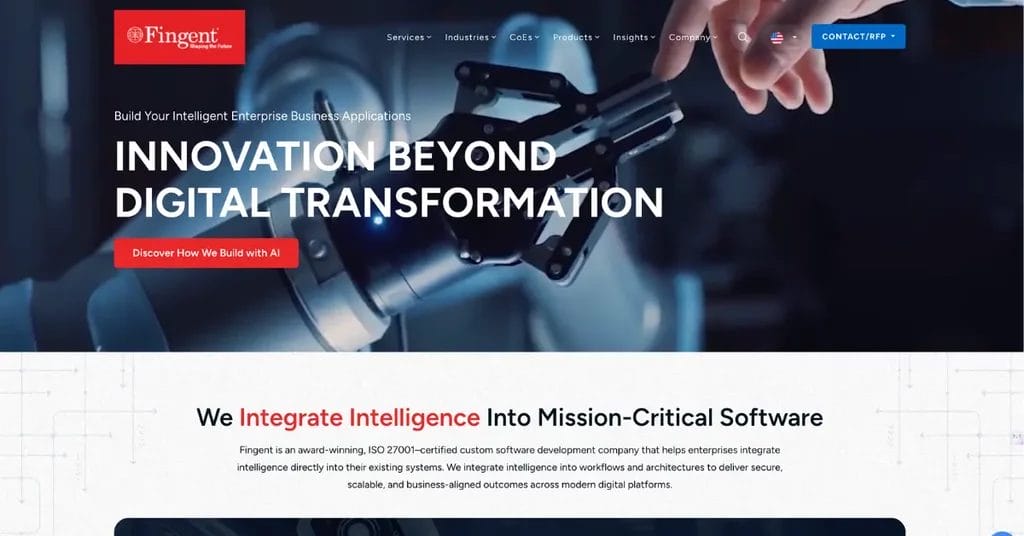
- Website: fingent.com
- Founded: 2003
- Focus: Custom software, cloud-native solutions, AI-driven applications, SAP migration, extended reality
- Budget range: Mid-to-high; suited for enterprises and scale-ups that prioritize reliability over lowest cost
- Hourly rate: $50–$99
- Projects completed: 700+
- Employees: 500+
- Locations: US, Australia (Brisbane & Sydney), India, UAE
Many companies struggle with scaling technology as they grow. Fingent’s consultative approach helps organizations plan for expansion without costly rebuilds.
A frequent challenge is managing legacy systems—Fingent’s expertise in modernization ensures smoother transitions.
Communication gaps often derail projects, but Fingent’s collaborative tools keep teams and clients aligned throughout development.
Why it matters
- Mid-to-high pricing ensures enterprise-grade reliability without the “cheap now, expensive later” trap.
- Large enough team to handle complex, multi-country projects, yet structured enough to keep communication clear.
- Proven track record means fewer surprises when deadlines and integrations get tough.
3. Simform
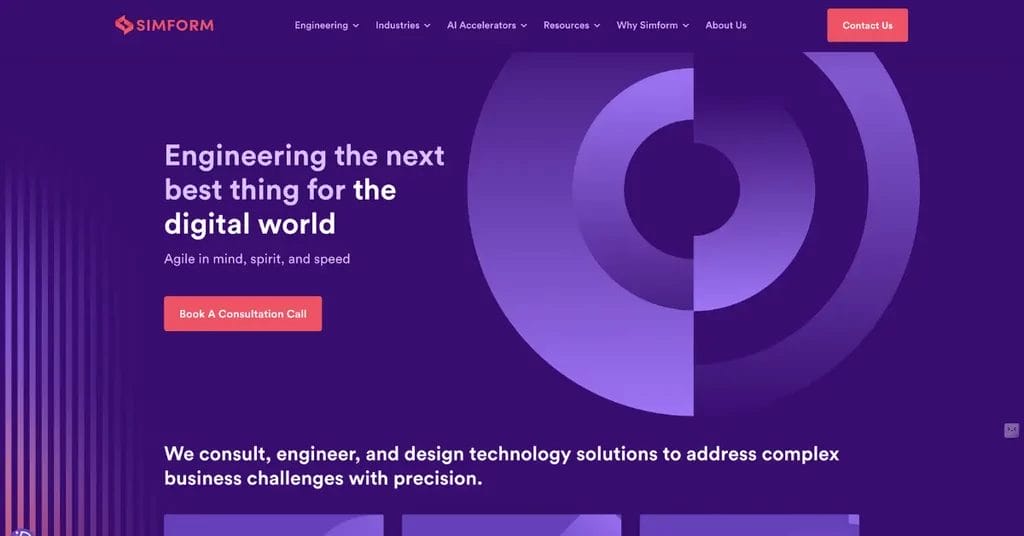
- Website: simform.com
- Founded: 2010
- Focus: Custom software development, cloud-native solutions, DevOps, AI/ML, and product engineering
- Budget range: Mid-to-high; suited for enterprises and funded startups that need scalable, long-term solutions
- Hourly rate: $25–$49
- Projects completed: 1000+
- Employees: 1000+
- Locations: US, Australia (Brisbane), Canada, India
Many organizations hit roadblocks when scaling digital platforms. Simform’s cloud-first mindset helps products stay resilient under growth pressure.
A recurring challenge is aligning technical builds with business outcomes—Simform’s consultative approach ensures both sides move together.
Distributed teams often lose momentum, but their sprint reviews and transparent dashboards keep progress visible and predictable.
Why it matters
- Mid-to-high pricing reflects stability and scalability, not short-term savings.
- Large team size ensures capacity for complex, multi-region projects.
- Proven experience across industries means fewer surprises when requirements shift.
4. Codenest
- Website: Code-nest. dev
- Founded: 2014
- Focus: Web development, mobile applications, embedded software, and business intelligence solutions
- Budget range: Mid-tier; suited for SMEs and startups that want tailored solutions without enterprise-level costs
- Hourly rate: $25–$49
- Projects completed: 50+
- Employees: 11–50
- Locations: Brisbane (partner presence), Tuzla (HQ), remote teams
Startups often struggle to balance speed with usability. Codenest emphasizes design-led development, ensuring products remain intuitive as they scale.
Integration across multiple tools can be messy, but their API expertise smooths the process.
Remote teamwork can cause delays, yet Codenest’s clear communication routines keep projects moving steadily.
Why it matters
- Mid-tier pricing makes it accessible for SMEs without sacrificing quality.
- Small team size means direct accountability and less bureaucracy.
5. Lounge Lizard
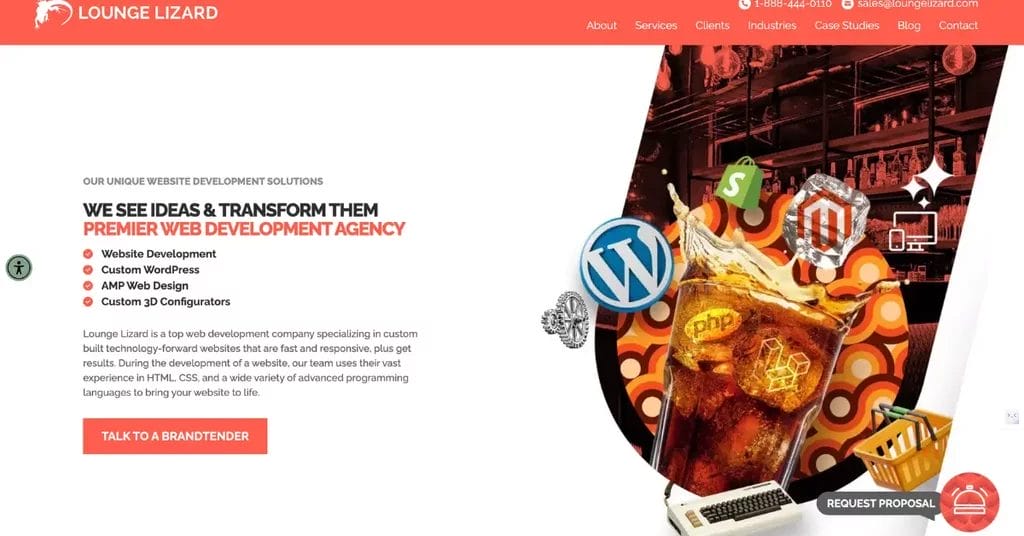
- Website: loungelizard.com
- Founded: 1998
- Focus: Web design, custom development, digital marketing, branding, UI/UX, SEO, eCommerce solutions
- Budget range: Mid-to-high; best for companies that want measurable ROI rather than lowest upfront cost
- Hourly rate: $100–$149
- Projects completed: 1000+
- Employees: 100+
- Locations: US (New York, Los Angeles, Washington D.C., Miami, Austin, Las Vegas), presence in Brisbane via global delivery
Lounge Lizard integrates both, ensuring that a site not only looks good but also drives traffic and conversions.
A common issue companies face is underestimating ongoing maintenance—Lounge Lizard’s structured support avoids the “launch and forget” trap.
What’s often underestimated is the importance of responsive design; without it, mobile users drop off quickly, and ROI suffers.
Why it matters
- Mid-to-high pricing reflects focus on ROI, not just aesthetics.
- Experienced in scaling from boutique brands to enterprise clients.
- Proven track record of measurable results (e.g., 200%+ lead increases for clients).
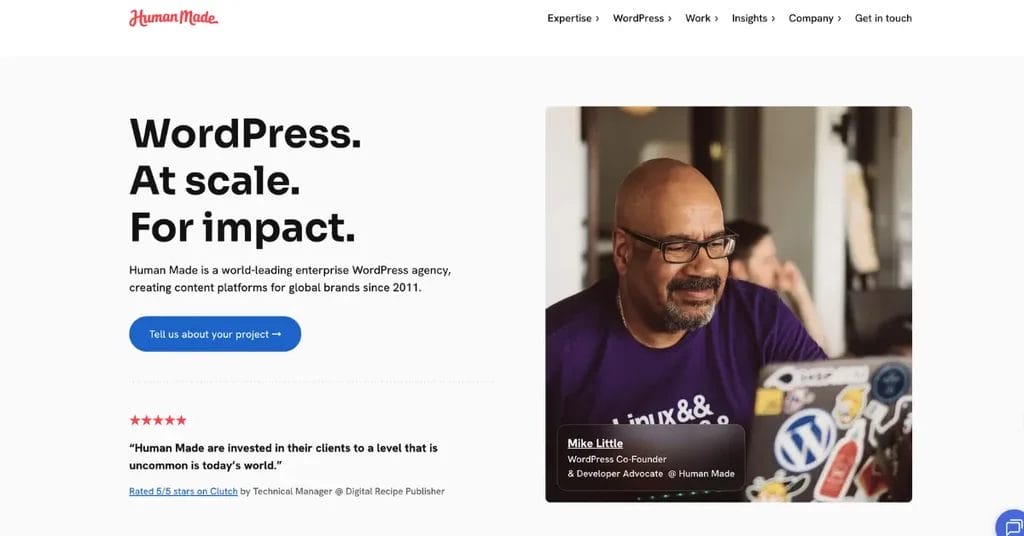
6. Human Made
- Website: humanmade.com
- Founded: 2010
- Focus: Enterprise WordPress development, cloud hosting, digital transformation, and content platforms
- Budget range: Mid-to-high; suited for enterprises and publishers needing scalable, long-term solutions
- Hourly rate: $100–$149
- Projects completed: 200+ enterprise-level projects
- Employees: 100+
- Locations: UK (HQ), Australia (Brisbane), US, Europe, Asia
In many teams, content platforms fail because they underestimate scalability. Human Made specializes in enterprise WordPress, which solves the problem of handling millions of users without collapsing under traffic spikes.
A common issue companies face is treating WordPress as “just a blog tool.” Human Made’s approach shows how it can become a full enterprise CMS.
What’s often underestimated is the complexity of cloud hosting—without proper planning, costs spiral.
Human Made’s managed hosting keeps budgets predictable while ensuring uptime.
Why it matters
- Mid-to-high pricing reflects enterprise-grade reliability, not short-term savings.
- Proven expertise in scaling WordPress beyond its traditional limits.
- Global team ensures coverage across time zones, reducing delays in distributed projects.
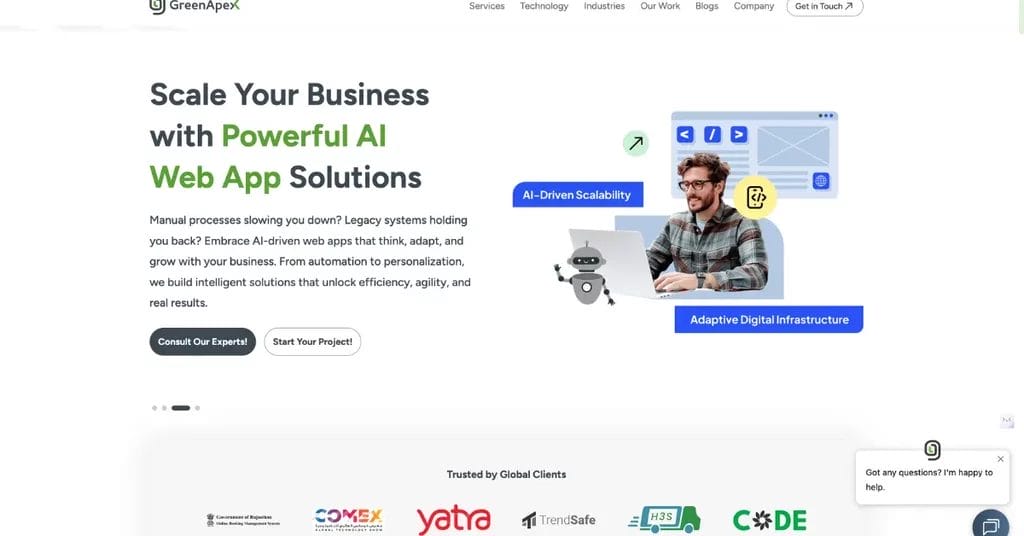
7. Green Apex
- Website: green-apex.com
- Founded: 2014
- Focus: AI-powered web and mobile app development, headless CMS, Strapi solutions, enterprise software
- Budget range: Mid-tier; suited for startups and SMEs balancing cost with scalability
- Hourly rate: $25–$49
- Projects completed: 470+
- Employees: 120+
- Locations: Australia (Brisbane), India, USA, Canada
Green Apex solves this with AI-driven web apps that automate workflows and reduce manual overhead.
A common issue companies face is underestimating CMS flexibility—choosing the wrong platform locks them in. Green Apex’s expertise in headless CMS and Strapi avoids that trap by keeping content scalable and adaptable.
What’s often underestimated is the importance of clear reporting in small-to-mid teams; without it, scope changes derail progress. Their structured delivery model keeps stakeholders aligned and budgets predictable.
Why it matters
- Mid-tier pricing makes them accessible without sacrificing scalability.
- AI-driven builds reduce long-term costs by automating repetitive processes.
- Proven track record across industries means fewer surprises when requirements shift.
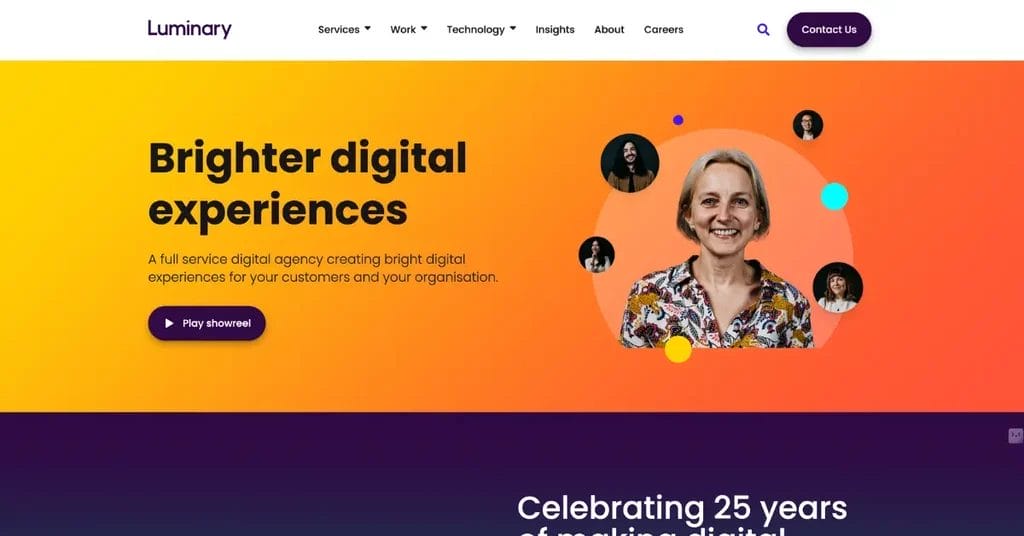
8. Luminary
- Website: luminary.com
- Founded: 1999
- Focus: Digital experience platforms, custom web development, UX/UI design, CMS solutions (Kentico, Sitecore, Optimizely), and eCommerce
- Budget range: Mid-to-high; suited for enterprises and government projects where reliability matters more than lowest cost
- Hourly rate: $100–$149
- Projects completed: 1000+
- Employees: 100+
- Locations: Australia (Brisbane, Melbourne, Sydney), remote teams
Luminary integrates both, ensuring platforms are not only functional but also user-friendly.
A common issue companies face is underestimating CMS complexity—choosing the wrong system can lock them in for years.
Luminary’s expertise across multiple enterprise CMS platforms reduces that risk.
What’s often underestimated is accessibility; ignoring it can lead to compliance issues and lost users. Luminary’s focus on inclusive design prevents those problems before they surface.
Why it matters
- Mid-to-high pricing reflects enterprise-grade delivery and long-term stability.
- Experienced in government and enterprise projects where compliance and scalability are non-negotiable.
- Proven track record means fewer surprises when deadlines and requirements shift.
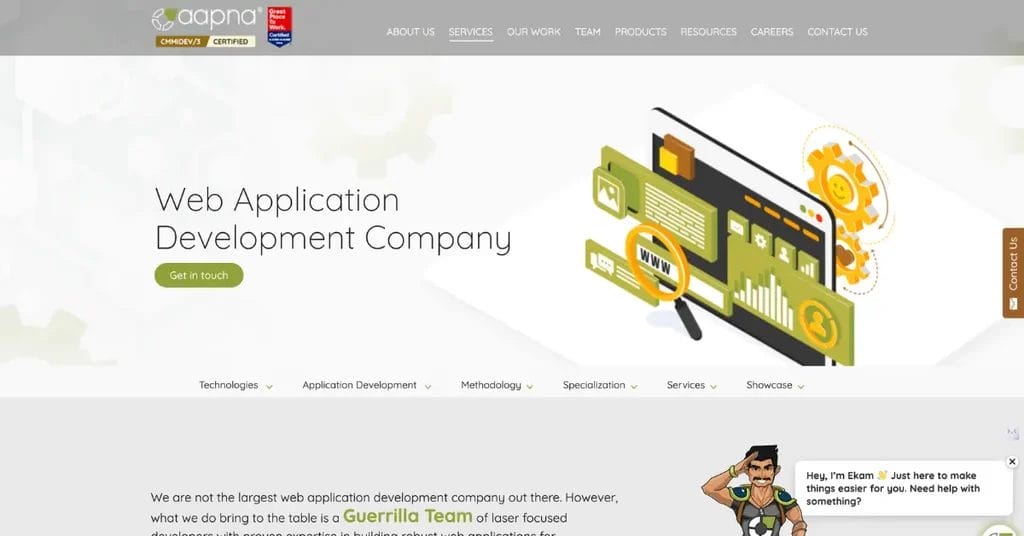
9. AAPNA Infotech
- Website: aapnainfotech.com
- Founded: 2007
- Focus: Custom software development, enterprise solutions, QA & testing, AI/ML, cloud services, and digital transformation
- Budget range: Mid-tier; suited for SMEs and enterprises balancing cost with reliability
- Hourly rate: $25–$49
- Projects completed: 500+
- Employees: 200+
- Locations: USA
AAPNA Infotech’s strong QA practice prevents costly bugs from surfacing late in delivery.
A common issue companies face is underestimating integration complexity—AAPNA’s enterprise experience reduces risks when connecting legacy systems with modern platforms.
What’s often underestimated is communication across distributed teams; without clear updates, scope changes derail progress.
AAPNA’s structured reporting and client-first approach keep stakeholders aligned and budgets predictable.
Why it matters
- Mid-tier pricing makes them accessible while still offering enterprise-grade reliability.
- QA-first approach reduces the risk of late-stage failures.
- Proven track record across industries means fewer surprises when requirements shift.
10. Metrix
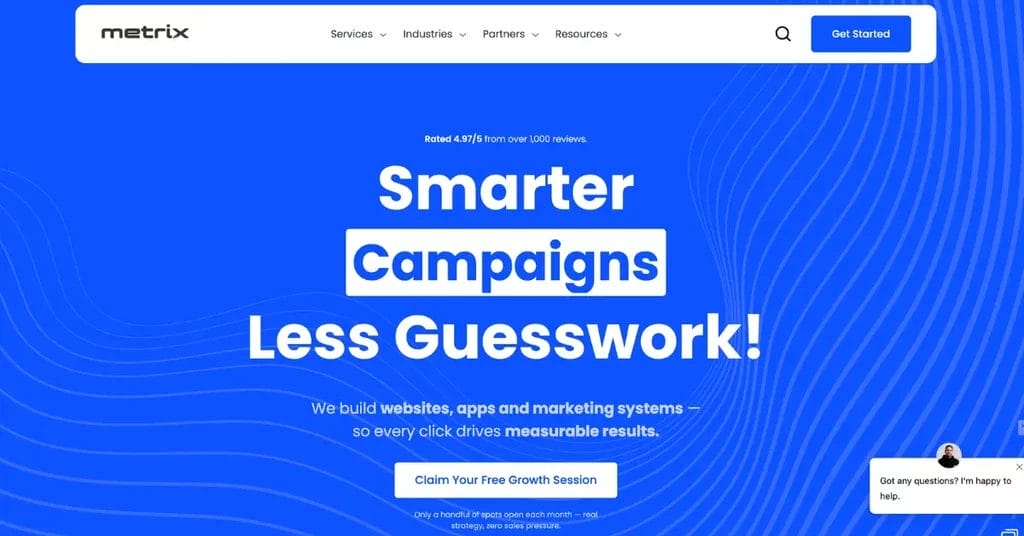
- Website: metrix.com.au
- Founded: 2000
- Focus: Custom software development, enterprise applications, cloud solutions, mobile apps, and digital transformation
- Budget range: Mid-to-high; suited for enterprises and government projects where reliability matters more than lowest cost
- Hourly rate: $100–$149
- Projects completed: 500+
- Employees: 100+
- Locations: Australia (Brisbane, Melbourne, Sydney), remote teams
Metrix’s experience with large-scale systems reduces that risk.
A common issue companies face is choosing vendors who deliver flashy prototypes but struggle with compliance and scalability.
Metrix’s track record in government and enterprise projects shows they can handle those constraints.
What’s often underestimated is the importance of ongoing support; without it, systems degrade quickly. Metrix’s structured maintenance plans keep platforms stable long after launch.
Why it matters
- Mid-to-high pricing reflects enterprise-grade delivery and compliance readiness.
- Proven expertise in government and enterprise projects where deadlines and regulations are non-negotiable.
- Strong support model reduces the risk of long-term system failures.
How to Choose a Software Development Company in Brisbane?
Choosing a software development company in Brisbane is a decision about risk, not just capability. The right choice reduces delays, cost overruns, and long-term maintenance issues.
1. Start With Your Business Problem, Not Features
Before speaking to vendors, clarify the problem you want to solve. In many teams, unclear goals lead to unnecessary features and wasted budget. A good company will challenge assumptions, not just accept requirements.
2. Evaluate Their Discovery and Planning Approach
Ask how they define scope, timelines, and risks. A common issue companies face is weak discovery that causes rework later. Strong planning signals delivery discipline.
3. Check Team Ownership and Communication
Confirm who will work on your project and how often you will receive updates. What’s often underestimated is how much poor communication slows progress.
4. Review Evidence, Not Promises
Look for case studies that explain decisions and trade-offs. Generic success stories are easy to write and hard to trust.
5. Understand Support and Long-Term Fit
Ask about post-launch support and documentation. Software without maintenance becomes a liability.
Choose a partner that can support your system as your business grows.
What Questions should You Ask Before Signing A Development Contract?
Before signing a development contract, the right questions help prevent cost overruns, delays, and failed delivery. The goal is clarity, not reassurance.
1. How Is Project Scope Defined and Controlled?
Ask how scope is documented and approved. A common issue companies face is unclear scope that keeps changing.
You should understand how new requests are handled and how they affect cost and timelines.
2. Who Owns the Code, Data, and Documentation?
Confirm ownership in writing. This includes source code, system documentation, and data.
What’s often underestimated is how hard it is to change vendors without clear ownership.
3. Who Will Work on the Project Day to Day?
Clarify roles and responsibilities. Sales-led promises often differ from delivery reality. Knowing the actual team reduces surprises later.
4. How Are Delays, Risks, and Changes Communicated?
Ask how progress is reported and issues are raised. In many teams, problems escalate too late because communication rules were never defined.
5. What Happens After the Software Goes Live?
Post-launch support should be clear. Ask what maintenance includes and what costs extra. Software without support quickly becomes a business risk.
How much does it cost to hire a software development company in Brisbane?
The cost of hiring a software development company in Brisbane depends on project complexity, team size, and engagement type.
It is not fixed, and what matters most is value, not the cheapest price.
Common Pricing Models
Most companies use one of three models:
- Fixed-Price Projects: You pay a set amount for a defined scope. A common issue companies face is scope creep, which can lead to extra charges.
- Time and Materials: You pay for hours worked. This is flexible but requires clear tracking to avoid overruns.
- Retainer or Dedicated Team: You hire developers full-time for a period. This works well for evolving projects with ongoing updates.
Key Cost Drivers
Costs rise with project size, complexity, and required expertise. What’s often underestimated is integration with existing systems and compliance with local regulations.
Additional expenses include testing, documentation, and post-launch support.
Average Cost Range in Brisbane
Small projects may start around AUD 15,000–30,000, mid-size projects around AUD 50,000–150,000, and large or complex systems can exceed AUD 250,000.
These figures vary based on features, timelines, and team experience.
Final Words
Brisbane’s software development scene offers many choices, but Technext stands out for decision-makers seeking balance between cost and adaptability.
In many teams, scope creep derails timelines—Technext’s agile approach keeps projects aligned while allowing scope changes midstream.
A common issue companies face is underestimating integration complexity; Technext’s cross-platform expertise reduces that risk.
What’s often underestimated is communication in distributed teams, yet their structured reporting ensures stakeholders remain aligned.
For startups and SMEs, mid-tier pricing avoids the trap of “cheap now, expensive later.”
Technext is large enough to scale, small enough to stay personal, and proven enough to deliver reliably.
If you’re ready to build smarter and scale faster, connect with Technext today and turn your ideas into results.
FAQs
Is Hiring A Software Development Company In Brisbane Worth The Cost?
Yes. Hiring locally ensures faster communication, local compliance, and better alignment with business needs.
While costs may be higher than offshore options, the reduced risk and higher quality often justify the investment.
How Long Does Custom Software Development Usually Take?
Custom software development typically takes 3–12 months, depending on complexity, team size, and project scope.
Iterative development and testing affect timelines. Well-scoped projects are faster, while unclear requirements often cause delays.
Do Brisbane Software Companies Provide Ongoing Support After Launch?
Most reputable companies offer post-launch support. This includes bug fixes, updates, performance checks, and minor enhancements.
Support ensures the software remains reliable and adaptable as business needs evolve.
Can A Local Company Scale With A Growing Business?
Yes. Experienced Brisbane companies can scale teams, infrastructure, and functionality as business needs grow.
What’s often underestimated is the need for proper planning to maintain performance and avoid operational bottlenecks